Book Review: Mortal Heart by Robin LaFevers

Mortal HeartThere aren’t enough stars in the sky to show much I loved this book (no way is five enough)! I haven’t had a book touch me so personally since reading The Mists of Avalon back in 1998.

But before I get into why this book affected me the way it did, a little explanation of the story. Mortal Heart is the third and final book in the His Fair Assassin trilogy by Robin Lafevers. The trilogy centers on a convent of nuns in medieval France who are devoted to one of the nine old gods of Brittany, Mortain, the god of death. As Death’s handmaidens they are trained to be assassins to carry out His will. This fictional setup is blended seamlessly with actual historical events of the time, namely a 13-year-old duchess’ fight to keep Brittany independent from the French.

Each book is told from a different character’s point of view, but is part of a continuing story. The first book, Grave Mercy, is told from Ismae’s point of view and is very much about politics and court intrigue. The second, Dark Triumph, is Sybella’s story, one of adventure and heart-pounding action. In Mortal Heart, Annith finally gets to tell her story, one of romance, love and faith. (If you haven’t read the rest of the series, start with Grave Mercy. You’ll be lost if you pick up with Mortal Heart.)

Throughout all of the other books, Annith has patiently waited in the convent where she was raised for her turn to be sent out to do Mortain’s work, which is her life-long dream. She’s watched Ismae and Sybella be sent out before her, even though she is the most skilled. When she finds out that the abbess has other plans for her, ones that involve her never leaving the convent, she must make a decision whether to obey the rules as she has always done, or seek Mortain’s will on her own. Her choice leads her on a journey not even the convent seeresss could have predicted, revealing long-held secrets that threaten to unravel everything she’s ever believed about herself and the convent and send her straight into the arms of Death himself.

Being a fan of love stories and fantasy, as well as someone who is fascinated by religion, it probably shouldn’t be surprising that this my favorite book of the series. It delves much more deeply into the religion and mythology of the series, placing a truly devoted nun, Annith, at the fore. As someone who used to want to be a nun (although, not the assassin kind), I deeply related to Annith. I understand what it’s like to “be in love with” your God, to want to do his will more than anything else in the world, as well as the frustration of not understanding how you’re supposed to bring this cherished dream to fruition. Add to this that the old gods are based on the Celtic pantheon (which is near and dear to my heart), and that this book deals with the intersection of the old religion and Christianity, and how the gods and mortals interact, and you have what is personally for me, a life-changing book.

But I also realize that most people won’t have this personal connection to the book. Even if you don’t relate to it on the level I do, I believe you will be moved by the themes of love, trust, faith and hope – things we all struggle with, no matter what our personal beliefs are. Mortal Heart is also very much about the lengths to which we are willing to go for those we love, and the impact of the secrets that each and every one of us carry around with us. There is something for everyone in this richly layered tale of devotion, love and adventure.

Maybe it’s because this is the final book in the trilogy, but I felt like I was much more a part of the world of this book than in the previous books. It was a joy to see Ismae, Sybella and Annith together again and learn the final resolution of the political situation I’ve been invested in since the first book. I also loved getting to see the inner workings of some of the other orders devoted to the old gods.

There is so much more I want to say about this book, but I can’t because it involves spoilers for key plot points. Please trust me on how wonderful this book is and give it, and the series, a chance. Even though it’s marketed as YA, it certainly doesn’t read like a YA book. To me it’s a wonderful historical fantasy perfect for those who love their fantasy with strong female characters, unlikely love, a bit of mystery, and a dash of danger.

Have you read any of the books in this series? Did you like them? Why or why not? Are you planning to read Mortal Heart? Does anything I’ve said about this series intrigue you? Why?

Book Review: Save the Date by Mary Kay Andrews

save the dateIf you’re looking for a great end-of-summer read, I’ve got one for you. Mary Kay Andrews’ novel Save the Date is light, fun and downright infectious. (I LOVED this book!)

Florist Cara Kryzik is trying to keep her business afloat while recovering from a painful divorce and helping nervous brides have the most beautiful big day possible. She doesn’t believe in love anymore, but that doesn’t mean her clients shouldn’t have their happily ever after. While the bills and IOUs (especially to the bank of daddy) pile up, she finds out she’s got celebrity-grade competition for a wedding that could make or break her, on top of a complicated blooming romance with Jack Finnerty, a guy she met in soap-opera like circumstances. But when both of their exs return and the bride of the golden wedding goes missing, Kara realizes she may have to sacrifice everything she holds dear to pull things together.

Save the Date is definitely going on my Best Books of 2014 list. It doesn’t take long for the characters to feel like friends, or to become addicted to finding out what happens next. While some of the conflict is a bit contrived (but show me a love story that doesn’t have some of that), the relationship between the characters and the spot on southern wit make even those pages a pleasure to read. Plus, Andrews’ lush detail actually had me wishing I could open up my own little floral shop, and I don’t know the first thing about horticulture! It’s a fun world to get lost in, and that’s all I require of light women’s fiction.

I’m usually a historical fiction or fantasy reader, but I picked up this one (on audio) because I thought I’d read about it somewhere and my library had it available. I’m so glad I gave it a chance. In tone, it reminds me a lot of my own book, He Loves Me, He Loves Me Not. Neither book will change the world, but they are both happy, funny and charming. And sometimes, especially amid life’s craziness, that’s exactly what we need.

Does anyone have any recommendations similar to this book? I’ll definitely be reading the rest of the author’s books, but I’d love to find more authors like her. Please let me know your favorite light women’s fiction, chick-lit or romance (not too graphic, please) books below.

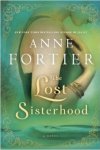
Book Review: The Lost Sisterhood by Anne Fortier

LostI’m thrilled to share with you an extended version of one of my first reviews for the Historical Novel Society. And I’m even more excited that it’s this book. Anne Fortier is one of my favorite authors and one you should read, if you haven’t. Her new book, The Lost Sisterhood comes out March 11.

Told in dual time period, The Lost Sisterhood is the story of two very different women who have the courage to defy convention in order to fight for what they believe in.

One is Diana Morgan, an Oxford philologist driven by family lore to prove that the legendary Amazons actually existed. When she’s approached by a stranger who offers her just the opportunity she needs, Diana embarks upon an adventure that takes her around the world in search of the last vestiges of this ancient civilization. But there are those who believe some secrets are meant to be kept, and Diana soon finds herself in grave danger.

Her ancient counterpart is a North African hunter named Myrina. She and her sister, Lilli, are the lone survivors of their village. Taken in by a group of priestesses, their idyllic life quickly becomes one of terror as hostile invaders desecrate all they hold dear. Myrina and the other survivors vow to never be victims again, a resolve tested many times, in many ways throughout the remainder of their lives.

As the narrative flips between the two tales, Fortier interweaves the story lines masterfully, giving just enough hint of what’s to come to keep the pages turning. Initially drawn in by the contemporary adventure, I quickly found myself absorbed by the historical tale, which puts a clever spin on Greek history and myth, making them come to life in fresh, compelling ways. By the end, both story lines had me racing to learn the final outcome, one which artfully marries the two stories in a series of twists that leaves you wondering just who to trust and who will prevail.

I had feeling there would be a love story somewhere in this book, and sure enough, there was (there are two, actually, but I’m referring to the contemporary one). When I first realized who it was going to be, I rolled my eyes and thought, “Oh God, please no.” But I give Fortier full credit for winning me over by the end of the book. Despite my initial resistance, I was cheering for the couple by the last few chapters and was thinking of them long after I finished the book.

If I had any criticism, it was that the ending, while good, wasn’t quite strong enough for me. The book was so exciting, I would have liked to have seen a more definite ending, rather than the general summary that was given. But all in all, that’s forgivable in light of such a strong story.

Fortier’s first novel, Juliet, is one of my favorite books, so this story had large shoes to fill. It did so well. Very highly recommended – 4.5 stars.

Have you read any of Anne Fortier’s books? Do you want to read this one? Why or why not?

Book Review: Shadow on the Crown by Patricia Bracewell

shadowWe’re less than half a month in to 2014 and I’ve already found what might just be my favorite book of the year. Shadow on the Crown by Patricia Bracewell was published in 2013 and highly lauded by the Historical Novel Society. Now I know why.

The book, the first of a trilogy, tells the story of a little-known historical queen called Emma of Normandy in the years before William the Conqueror did his thing in 1066. The Saxons are at the height of their power in Britain, but are heavily threatened by the Danes, who raid their coasts yearly. Emma’s Norman noble family is an ally of both, and seeks to raise their own prestige by balancing the favor of both kings. In an effort to broker peace, young Emma is married the British king, Aethelred, who is a haunted, brutal man. Once at court, Emma finds that her role as queen is not at all what she expected and she must use all the wits God gave her to survive in a world that is a real life game of thrones.

Shadow on the Crown sucked me in from the first pages. To me, this book embodies everything historical fiction should be. Bracewell is particularly adept at world building. Despite my Arthurian research, the Saxons are not a people I’m intimately familiar with, but after reading this book, I feel like I have spent time in their bleak, brutal world and have come away with a greater understanding of what life in those times was like. Part of what I think makes this possible is that Bracewell based her story heavily in the Anglo Saxon Chronicle and uses actual Saxon words throughout the book (oh, that such a thing were possible for Arthurian legend!), which lends a strong air of authenticity to the story.

While the book is far from doom and gloom, she doesn’t shy away from the realities of the time: abusive men, dismissive attitudes toward women, brutal war and savage tactics, including rape. But beyond that, Bracewell has done a superior job of getting into the mindset of the Anglo-Saxon people, a reality where signs and portents were everywhere, ones fate (wyrd) was pre-ordained and death and betrayal lurked around every corner.

In addition, Bracewell’s characters are well crafted. Four tell the story, each with their own point of view. Emma is incredibly strong for her time period, but it is not at all anachronistic. This is a strength that comes not from taking up arms, but from being unwilling to surrender to less than perfect circumstances, using all her wits to stay one step ahead of those who would harm her, and when necessary, being as manipulative as the men to gain what she wants. The other female lead, Elgiva, is similarly strong, although her intentions are much darker than Emma’s. While Aethelred is violent and possibly insane, it isn’t out of keeping with a man who has known treachery since childhood and suffered great loss in his life. His foil is his eldest son, Aethelstan, who is much more noble and likable, showing that the Saxons were not just men drunk on blood and gore, but living, breathing human beings who cared for one another as well.

Bracewell’s writing style is one that should be studied by every writer. She uses every word intentionally, and when taken together, they are almost poetic. Her ability to evoke a time nearly a millennium in the past is masterful, as her descriptions put you right in the center of the action in a world so foreign to our own. Her dialogue is witty and well crafted, with every character having a distinct voice. In particular, Shadow on the Crown is one of the best examples of how multiple points of view should be handled, as each change in perspective blends seamlessly with the one before and after, avoiding the “head hopping” and jarring transitions that can sometimes occur in this style.

This book has taught me so much as a writer, which is the highest praise I can possible give a novel. It makes me want to go back to my manuscripts and see how I can improve them. I will certainly be studying her use of multiple points of view, as I attempt that in my own novels in the future.

I cannot wait until the next book comes out. Shadow on the Crown proves that a debut novel can – and should – be a masterpiece. Five stars.

Have you read this book? Did you like it? Why or why not? After reading this review, are you interested in reading it?

My Top 10 Books of 2013

So Goodreads tells me that I’ve read around 50 books this year. And those are only the ones I bothered to track. If you count my research books, the number is probably closer to 80 (seriously, I counted). The good news for you is that I’m not going to review all of them, just a handful of my favorites.

Please note: These are listed in no particular order. Not all of these books were published in 2013; they are just ones I read this year.

Fiction

Winter Sea 1. The Winter Sea by Susanna Kearsley – This was the first book I read by this author, who is now in my top five of all time. The Winter Sea is a historical time travel story that follows writer Carrie McClelland as she both writes her next book and uncovers family secrets. But this is no mere fictional tale; it takes on the idea that memories can be passed down through generations. It’s a great semi-gothic, semi-romance, but what really propelled this to the top of my list is Kearsley’s ability to describe what it’s like to be in the “writer’s trance” and feel compelled to write, something every writer will be able to relate to. Trust me, you don’t want to miss this one.

Demon lover2. The Demon Lover by Juliet Dark – Juliet is the pen name of Carol Goodman (whose book Arcadia Falls could also easily have made this list) and is the first, and in my opinion the best, novel of the Fairwick trilogy. It tells the story of Callie McFay, a professor newly installed at Fairwick College, who experiences startlingly vivid (read: sexy) dreams after moving into an old house in the area. She soon learns that she’s not alone in the house, nor are all the residents of the town as normal as they first appear. Something supernatural this way comes. 🙂

3. The Night Circus by Erin Morgenstern – Which I reviewed here.

4. Night of Cake and Puppets by Laini Taylor – This novella takes place during Taylor’s previous book, Daughter of Smoke and Bone (go read it if you haven’t already. It’s amazing!), and tells the story of the first date between Zuzanna and Mik, two of the supporting characters in the Daughter series. This story is sweet and full of whimsy and will leave you with a smile on your face and a renewed belief in magic and the power of love. This is one I plan to read over and over again.

Dark Triumph5. Dark Triumph by Robin LaFevers – This is the second book in Lafevers’ His Fair Assassin series, a YA trilogy I can’t recommend highly enough. The trilogy is about a convent of assassin nuns who worship the old gods (I know it sounds crazy, but hear me out) set in a fantasy version of medieval Brittany. The first book, Grave Mercy (also wonderful), told the story of Ismae; this is Sybilla’s story, which is much darker and fraught with danger. What has captivated me about this series is the mythology Lafevers has created. I find myself wanting to believe it is real. Why this books are classified as YA is beyond me (probably the main character’s age); they certainly don’t read that way to me and I recommend this series for readers of all ages.

Non-fiction

1. Historic Figures of the Arthurian Era: Authenticating the Enemies and Allies of Britain’s Post-Roman King by Frank D. Reno – I read this book during my novel research this year and could have kissed the author – that’s how useful it was. Reno examines Arthurian legend and then lays over it the historical records of the time (such as they are) to try and determine who the historical figures behind the myths were. I used it especially to get the lay of the land in the years leading up to and after what I consider the Arthurian period. To me, this is a resource that is much undervalued in the study of who King Arthur may have been and the world in which he likely lived.

Orange is the new2. Orange is the New Black by Piper Kerman – I read this book after seeing the Netflix series which is loosely based on Kerman’s experiences and I’m glad I did it in that order. Usually, I’m a book-first kinda gal, but in this case, it was fun connecting the fictional characters to their real-life counterparts. If you’ve seen the series, I’ll offer this word of warning, much of it is fictionalized, so don’t go into the book expecting the same thing. The book is tame by comparison, but it also offers an interesting perspective on our system of institutional justice and the power of the collective female spirit to support and thrive, even in the darkest of circumstances.

3. The English Housewife by Gervase Markham and Michael R. Best – I read this book while doing research for a Tudor-era book that is now on hold indefinitely, but I had to include it on this list. This is an actual instruction manual of all the things an English woman would have been expected to know in the early 17th century. Consider it a Renaissance Redbook. If you are interested in how people lived during that time, how they cured disease or even the elements and courses of a proper feast, this is the book for you. The information on their folk cures was so detailed, it made me want to injure my characters just so I could heal them.

Tudor Housewife4. The Tudor Housewife by Alison Sims – This is an incredibly easy to read compendium of the elements of daily life during Tudor times. Unlike a lot of scholars, Sims makes this time period fun, while enlightening on subjects as varied as washing clothes, education, preserving food and how to brew beer.

5. Writing the Breakout Novel by Donald Maas – Mr. Mass is a well-known agent and this book is the result of his years of experience in the publishing industry. Unlike other “how to write” type books, this one goes beyond the basics, showing you how to take your writing to the next level and push yourself further in your creation of a plot with truly high stakes that the reader will care about. Maas doesn’t just want to teach you how to be a writer; he wants to teach you the elements that will make you a best-seller. I found this book very thought provoking and it is one I’ll turn to time and time again when plotting books.

—–

LostAnd as a little teaser for next year, I’ll add that one of my favorite books of 2013 won’t actually be out until March 2014 in the US. It’s The Lost Sisterhood by Anne Fortier, which I was fortunate to review for the Historical Novel Society. An in-depth review will be posted here as soon as the short version is published in Historical Novel Review.

Happy New Year, everyone. May 2014 bring you even bigger blessings and good fortune than this year did. I’m hoping to have lots of big news for you, so please stay tuned and as always, thank you for reading!

What were your favorite books of 2013? What should I add to my TBR pile?

Comments are closed due to spam.

Book Review: Divided by Jennifer Sights

Full disclosure: I’m friends with the author, Jen Sights. We met through NaNoWriMo. But she did not provide the book to me or ask me to review it. I’m doing it because I want to.

DividedDivided is the story of private investigator Elena Ronen. When she’s called on by a mother to find her missing teenage daughter, Courtney, it seems like run-of-the-mill case. It turns out to be anything but. Elana is pulled into a world of witches, covens and dangerous power plays she never knew existed. Along the way, she discovers her own power and meets Vittorio, a handsome fellow witch to whom she’s instantly attracted. As the case progresses, magic, fate, love and human machinations intervene to blur the lines between friend and foe, illusion and reality. Elena is determined to find out the truth and rescue Courtney, but doing so may cost her life and endanger those she holds most dear.

I downloaded Divided because I wanted to support my friend and fellow writer. Never in a million years did I think I’d finish it in a matter of days. I couldn’t put it down and spent way too many nights awake reading when I should have been sleeping. Jen does a great job of turning what could be a conventional urban fantasy plot on its head. She deals with magic in a way I’ve never seen before (and I’ve read LOTS of books with magic in them), plus the powers Jen gives to her witches and the mythology governing them are fresh and believable (I’m still waiting to discover mine). Her storytelling ability is evident in the way she uses the missing girl plot as a way of revealing the bigger story of Elena, Vittorio and the coven they could rule or may kill them both.  And if you’re wondering about character development, let me just say this: I’d like Vittorio to leap off the page and kiss me (although sometimes his devotion gets a little cloying for me). I also yelled at the book (out loud) when something bad happened to one character, so Jen definitely got me to care about them.

While the book has some flaws and typos, Jen is a promising author and Divided is an excellent illustration of her talents. I’m looking forward to reading the sequel, Ravaged (which comes out September 26) and watching her grow both as a writer and in her career.

Have you read Divided? What did you think of it? What similar types of books would you recommend?

Book Review: The Crown by Nancy Bilyeau (plus comments on The Chalice)

I’m proud to announce that I am now an ebook reviewer for the Historical Novel Society!  Since my other reviews on this site are longer and more impassioned (say it ain’t so!), I wrote this one within the HNS guidelines as a kind of “audition” for the role. Following that review are a few comments on the second book in the series.

The CrownThe Crown is not your average Tudor tale. Sure, all the usual players are there: King Henry VIII, Princess Mary, Thomas Cromwell, even Queen Katherine, but they are on the periphery. This is the story of Joanna Stafford, a noblewoman turned novice at the Dominican priory of Dartford around the time of the dissolution of the monasteries.

Nancy Bilyeau does a masterful job of illustrating a side of Tudor life you don’t often hear much about. What was it like to be Catholic during a time when Henry was growing increasingly antagonistic of the Church? What happened to those whose religious vocations were invalidated thanks to the king’s vendetta? Add in a murder and the search for a precious relic that may or may not save the day, and you’ve got the makings of a great read.

The strongest point of the book for me was the portrayal of daily life, secular, royal and religious. Bilyeau obviously did her research and it shows in the details that make the world come to life. Joanna is an engaging, sympathetic heroine, and those around her, Brothers Edmond and Richard, the Sisters and Geoffrey Scoville are unique, if flawed, characters.The who-done-it of the murder was also well done, and is concluded in a way I never would have guessed.

But it’s not a perfect book. Sometimes Joanna’s reactions seem forced, like we didn’t get enough insight into the way her mind works to understand why she reacted as strongly as she did. I liked the relic idea, but the search for it wasn’t fast paced or life-or-death enough for me to hold my breath about it. (There are some great examples of how to write atmosphere around this plot point, though.)

All in all, this book is highly recommended for fans of Tudor fiction. 4/5 stars.

—-

The ChaliceSince the time I originally wrote this review, I’ve also read the sequel, The Chalice. I liked it slightly more than The Crown, mainly due to the whirlwind of action in the last 1/4 of the book.  Most of the same comments apply, although we do finally get explanation for Joanna’s reactions, which was missing from the first book. They really helped me understand and sympathize with Joanna.

Joanna’s relationships with Edmund and Geoffrey, as well as the use of prophecy (although historically accurate) seemed a little melodramatic to me, and contributed to my wariness during the first half of the book. But once that is dispensed with and we finally get to the action that Joanna must perform, the book picks up speed and is hard to put down. Bilyeau also includes a masterful plot twist explaining Henry VIII’s bizarre reaction to Anne of Cleaves. 4.5/5 stars.

Have you read The Crown or The Chalice? If so, did you like either one? If not, are you interested in them? Why or why not?

Book Review: The Night Circus by Erin Morgenstern

nightcircus-styled-01Wow. When I finished this book that was all I could think. But I’m sure you’re going to want more in a review, so here it goes:

The Night Circus is the story of a mysterious circus that is only open at night and comes and goes from a location without warning. But the circus is only a backdrop for a much more serious event: a magical competition between Celia and Marco, who were drafted into this fight as children without their consent because of their abilities to control time and space. Over time, it becomes clear that their competition involves not only the two of them and their masters, but the whole circus and the fate of everyone in it.

This is Erin Morgenstern’s first novel, which is so hard to believe because she writes with the skill of someone who’s been honing her craft for 30 years. It’s a lush, romantic, suspenseful tale worthy of the hype it has received. Morgenstern truly makes magic real through her prose. The descriptions are so vivid, so evocative in their creativity that you feel like you’re in a dream in the whole time – one you can’t wait to get back to. From the searing pain of a binding spell to the lofty heights of a circus tent meant to emulate walking the clouds, you’ll feel like you’ve lived it all by the end of the book. The plot is well paced and will leave you breathless at certain points, while wishing you could freeze the story on a particularly beautiful scene at others. The characters are strong and unique, about as far from stock as you get. Thanks to the author’s masterful storytelling, you form a relationship with them as you read that makes them all feel like family, even the ones you despise.

If I had one criticism of the book, it would be that the ending fell a little flat for me. The book is so grandiose that I was expecting a bang at the end, when it really just quietly came to a conclusion. What happens makes sense, but it’s a little bit disappointing that there wasn’t one more dramatic revelation. It’s like being on a roller coaster and going up that last hill, but instead of the final sharp descent, you just travel on an even track until the ride stops. But that’s not enough for me to take anything away from my 5-star rating of the book.

I listened to this as an audio book and I have to say it was a little difficult to follow the jumps in time since I couldn’t just flip back a few pages to see the order of things. But the narrator, Jim Dale, once again proves why he’s the best in the business. I highly recommend this format.

In short, this is an incredible book that I will read over and over again, if only to escape from reality and hopefully learn to be a stronger writer from Morgenstern’s enviable talent. I can’t wait to see what she writes next.

PS – This is the only book written in present tense I’ve ever read where I didn’t notice it (and I hate present tense books). I actually felt it was the only way the story could have been told. Bravo to the author for showing this skeptic how this manner of writing can be done well.

Have you read The Night Circus? If so, what did you think of it? If not, is it something you plan to read?

Book Review: Stone Lord by J.P. Reedman

CoverBlog note: This is the last post of this year. In 2013, new posts will be published on Mondays, starting  January 7. Happy Holidays to all, no matter what you celebrate.

About a month ago, I was fortunate to interview author J.P. Reedman about her new debut novel, Stone Lord. At the time, I knew very little about the book, other than it was Arthurian legend set in the Bronze Age. This unusual concept, combined with her interview and excerpts posted online, were enough to convince me to buy her book. Given that I can be a bit of a tough sell when it comes to anything Arthurian, I was happily surprised by how much I liked the book. And “liked” is an understatement. Ask anyone who had to listen to me rave while reading it. If you want the short version: 4.5 stars.

Despite its title, this book isn’t only Arthur’s tale. It begins with the story of the boy who would become Merlin, how he escaped the clutches of Vhortiern (Vortigern), and grew to guide U’thyr (Uther), Arthur’s father. Once the young king is born, his story comes to the forefront. Throughout the book, Reedman gifts us with truly creative takes on classic Arthurian legend, including the dragons under the tower, Merlin’s relationship with Nin-Aeifa (Nimue),  the nature and purpose of Afallan (Avalon), the Sword in the Stone, the finding of Excalibur (called here Caladvolc), and more. The only place where I felt it fell a little short was in Mordred’s conception, which reminded me of other versions I have read, but with a gothic chill that the others lack. I especially appreciated her inclusion of the Green Knight and his beheading game and the hunting of the boar T’orc, neither of which I’ve seen touched by authors in quite some time.

Honestly, I haven’t been this captivated by a book since The Mists of Avalon. But then again, I’m a sucker for all things mythological, and that is where Reedman truly excels. Her descriptions of the ancient monuments and the rites associated with them will take your breath away. She has a way of making such an obscure period of the past come to life, that you half expect to be there when you put the book down. It is a story firmly rooted in its time period, one that actually caused me, as a writer, to reexamine some of my character’s motivations to make sure they are historically accurate. (That is one of the highest compliments I can pay an author – to have learned something about my own work by reading theirs.) Reedman’s insertion of the Arthurian story into the Bronze Age is done so seamlessly that it’s easy to forget this isn’t its usual time period. I’m not in a position to judge the archeology, but I am certain her expertise in this area is a major contributor to making this book feel so real.

The pacing of this book is well done. I didn’t want to put it down. The only place where I felt it was a little off was Fynavir’s (Guinevere) kidnapping. It’s my understanding that in most tales, Melwas holds Guinevere captive for quite some time. But in Stone Lord, she’s being carried away on one page and 25 pages later (most of which is taken up by another part of the story), Fynavir is rescued. Reedman spends far more time on the hunt of the boar than she does on the event that is the catalyst for Fynavir and An’kelet’s affair, which doesn’t seem equitable. I also felt that the ending was a little rushed, like Reedman was in a hurry to wrap things up, but this is a common complaint I have about many books, so it may be more me than the author.

In a few places, just a little more explanation would have helped the overall story. I felt that the background between Fynavir (Guinevere) and An’kelet (Lancelot) depended a lot on the reader’s knowledge of the myth of King Arthur. There are furtive glances and reddening cheeks that make you aware there is an attraction and some sort of past between the two, but the nature of this is never made clear. I would have liked at least a few pages of background to help me understand why, in Reedman’s world, these two are so heartbroken that they can’t be together and what bonded them in the first place. I also would have liked a little more motivation for Morigau (Morgan). She’s as crazy as crazy comes, but the only explanation we really get is a preternaturally intelligent girl of “no more than three” wailing in jealousy that Merlin picked Ardhu to train rather than her. Later, she rails about how Ardhu took everything away from her, especially the love of her family, but here again there’s so much reliance on prior knowledge of legend that Morigau’s motivation feels forced on her. If we could have seen one or two scenes showing how her life changed for the worse because of Ardhu, her venom would be easier to understand. Maybe these things will be further explained in the sequel, Moon Lord, but I would have liked to have had them in the context of this book.

One key thing I thought was missing from the book was a list of place names, both then and now, and maybe even a map, since they are so different from anything most of us would be familiar with. Reedman has a list on her website, but even that individual post is difficult to find and this isn’t a convenient solution when you’re reading and don’t feel like getting online on to verify a location. I made it through just fine without the map, but it would have been nice to be able to flip to the front or the back to verify the characters were going where I thought they were.

Also, if you buy a first edition, there are several typos, so be forewarned. The author is aware of these and will be correcting them in future editions.

But even for its flaws, Stone Lord is a fantastic book. I think it is worthy of a Big Six publisher’s attention, but I’m pretty much the ideal audience for a book like this. If you like the story of King Arthur and can handle a non-traditional setting, you’ll enjoy this book. Congratulations to Reedman on a fine contribution to the Matter of Britain. I look forward to reading more of Ardhu’s adventures in Moon Lord when it comes out.

Have you read Stone Lord? If so, what did you think of it? If not, does it interest you? Why or why not?