My Top 10 Books of 2013

So Goodreads tells me that I’ve read around 50 books this year. And those are only the ones I bothered to track. If you count my research books, the number is probably closer to 80 (seriously, I counted). The good news for you is that I’m not going to review all of them, just a handful of my favorites.

Please note: These are listed in no particular order. Not all of these books were published in 2013; they are just ones I read this year.

Fiction

Winter Sea 1. The Winter Sea by Susanna Kearsley – This was the first book I read by this author, who is now in my top five of all time. The Winter Sea is a historical time travel story that follows writer Carrie McClelland as she both writes her next book and uncovers family secrets. But this is no mere fictional tale; it takes on the idea that memories can be passed down through generations. It’s a great semi-gothic, semi-romance, but what really propelled this to the top of my list is Kearsley’s ability to describe what it’s like to be in the “writer’s trance” and feel compelled to write, something every writer will be able to relate to. Trust me, you don’t want to miss this one.

Demon lover2. The Demon Lover by Juliet Dark – Juliet is the pen name of Carol Goodman (whose book Arcadia Falls could also easily have made this list) and is the first, and in my opinion the best, novel of the Fairwick trilogy. It tells the story of Callie McFay, a professor newly installed at Fairwick College, who experiences startlingly vivid (read: sexy) dreams after moving into an old house in the area. She soon learns that she’s not alone in the house, nor are all the residents of the town as normal as they first appear. Something supernatural this way comes. 🙂

3. The Night Circus by Erin Morgenstern – Which I reviewed here.

4. Night of Cake and Puppets by Laini Taylor – This novella takes place during Taylor’s previous book, Daughter of Smoke and Bone (go read it if you haven’t already. It’s amazing!), and tells the story of the first date between Zuzanna and Mik, two of the supporting characters in the Daughter series. This story is sweet and full of whimsy and will leave you with a smile on your face and a renewed belief in magic and the power of love. This is one I plan to read over and over again.

Dark Triumph5. Dark Triumph by Robin LaFevers – This is the second book in Lafevers’ His Fair Assassin series, a YA trilogy I can’t recommend highly enough. The trilogy is about a convent of assassin nuns who worship the old gods (I know it sounds crazy, but hear me out) set in a fantasy version of medieval Brittany. The first book, Grave Mercy (also wonderful), told the story of Ismae; this is Sybilla’s story, which is much darker and fraught with danger. What has captivated me about this series is the mythology Lafevers has created. I find myself wanting to believe it is real. Why this books are classified as YA is beyond me (probably the main character’s age); they certainly don’t read that way to me and I recommend this series for readers of all ages.

Non-fiction

1. Historic Figures of the Arthurian Era: Authenticating the Enemies and Allies of Britain’s Post-Roman King by Frank D. Reno – I read this book during my novel research this year and could have kissed the author – that’s how useful it was. Reno examines Arthurian legend and then lays over it the historical records of the time (such as they are) to try and determine who the historical figures behind the myths were. I used it especially to get the lay of the land in the years leading up to and after what I consider the Arthurian period. To me, this is a resource that is much undervalued in the study of who King Arthur may have been and the world in which he likely lived.

Orange is the new2. Orange is the New Black by Piper Kerman – I read this book after seeing the Netflix series which is loosely based on Kerman’s experiences and I’m glad I did it in that order. Usually, I’m a book-first kinda gal, but in this case, it was fun connecting the fictional characters to their real-life counterparts. If you’ve seen the series, I’ll offer this word of warning, much of it is fictionalized, so don’t go into the book expecting the same thing. The book is tame by comparison, but it also offers an interesting perspective on our system of institutional justice and the power of the collective female spirit to support and thrive, even in the darkest of circumstances.

3. The English Housewife by Gervase Markham and Michael R. Best – I read this book while doing research for a Tudor-era book that is now on hold indefinitely, but I had to include it on this list. This is an actual instruction manual of all the things an English woman would have been expected to know in the early 17th century. Consider it a Renaissance Redbook. If you are interested in how people lived during that time, how they cured disease or even the elements and courses of a proper feast, this is the book for you. The information on their folk cures was so detailed, it made me want to injure my characters just so I could heal them.

Tudor Housewife4. The Tudor Housewife by Alison Sims – This is an incredibly easy to read compendium of the elements of daily life during Tudor times. Unlike a lot of scholars, Sims makes this time period fun, while enlightening on subjects as varied as washing clothes, education, preserving food and how to brew beer.

5. Writing the Breakout Novel by Donald Maas – Mr. Mass is a well-known agent and this book is the result of his years of experience in the publishing industry. Unlike other “how to write” type books, this one goes beyond the basics, showing you how to take your writing to the next level and push yourself further in your creation of a plot with truly high stakes that the reader will care about. Maas doesn’t just want to teach you how to be a writer; he wants to teach you the elements that will make you a best-seller. I found this book very thought provoking and it is one I’ll turn to time and time again when plotting books.

—–
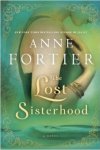
LostAnd as a little teaser for next year, I’ll add that one of my favorite books of 2013 won’t actually be out until March 2014 in the US. It’s The Lost Sisterhood by Anne Fortier, which I was fortunate to review for the Historical Novel Society. An in-depth review will be posted here as soon as the short version is published in Historical Novel Review.

Happy New Year, everyone. May 2014 bring you even bigger blessings and good fortune than this year did. I’m hoping to have lots of big news for you, so please stay tuned and as always, thank you for reading!

What were your favorite books of 2013? What should I add to my TBR pile?

Comments are closed due to spam.

Re-learning to Imagine Like a Child

Writing isn’t always easy. My Spellbound Scribes post about trying to get back the type of free imagination I had as a child.

What Lurks Beneath Glastonbury Abbey?

2013-Light-Darkness (1)Happy Winter Solstice! 

I’m participating in a special blog hop, Casting Light Upon the Darkness, organized by author Helen Hollick. The theme is throwing light upon something – a mystery or something little known. Thirty authors are participating, so check out the whole lineup

Without further ado, here’s my mystery for you:

Many people are familiar with the mystery of King Arthur’s grave at Glastonbury Abbey. (Was it really him or was it all a hoax?) But when I was there in June, I learned that’s not the only one. In fact, there’s one lurking right under your feet as you traverse the grounds.

The abbey has a series of tunnels leading from various points inside to places in the village or surrounding area. No one knows for sure what they were used for. The respectable answer is that they were a way for the monks to travel from place to place in inclement weather or a passageway for noble guests who didn’t want to deal with the crowds at the abbey gates. But knowing human nature, there’s a good possibility they had nefarious purposes as well.

A few of the tunnels have been verified as real and some people even still get to see them today. (Sadly, I did not.) Others are merely rumor kept alive by tradition. Here’s a list of where they are and what I and others believe they may have been used for:

  1. From the south side of the Lady Chapel to the Great Hall within the Abbey (verified) – Makes sense that this was probably a passage for the monks.
  2. Leading from the Abbey to the River Brue (some say verified, some say rumored) – Could have been used to ferry supplies, but also could have been part of a black market. This one is also thought to have been a place where monks could have met their lovers or others they wished kept out of the public eye.
  3. Leading from the Abbey to the George and Pilgrim Inn (verified) – This tunnel can still be seen the cellar of the inn. The two buildings are just across the road from one another, so it’s possible that it was used by the monks who worked in the inn to for easy access back and forth to facilitate work and prayer schedules or for easy access by pilgrims. It’s also possible that there were some clandestine dealings involved.
  4. Leading from the Abbot’s chambers to a room in the George and Pilgrim Inn (rumored) – This passage way, according to one source, led to a room that was always on reserve for the abbot, who used it for “the purging of his loins.” I’ll let you decide what that means.
  5. Leading from the Abbey to Glastonbury Tor (rumored) – This one is hotly debated. As there was a cathedral on top of the Tor during the abbey’s heyday, it’s not out of the realm of reason that the abbot could need an easy way to pass between the two. However, there is a good amount of distance separating the locations, so the reality of being able to travel that far underground is questionable at best.

Even if we never know their true purpose, they add to the mystery of an already enchanting location. There are even ghost stories associated with some of them, but that’s a topic for another day.

Sources:
Personal conversations with Jamie George and Geoffrey Ashe at Glastonbury Abbey, June 2013
King Arthur’s Avalon by Geoffrey Ash
Glastonbury: Maker of Myths by Frances Howard-Gordon
British History Online: A History of the County Seat of Somerset, Vol 9: Glastonbury and Street
The Tunnels of Glastonbury

Have you heard of these mysterious tunnels? Have you seen them yourself? What do you think of them: fact or fiction? What do you think they may have been used for?

Please visit the pages of my fellow blog hop participants. You never know what surprises (or free prizes!) you might find. And, if you want to share on Twitter, please use #21DecBlogHop.

  1. Helen Hollick : A little light relief concerning those dark reviews! Plus a Giveaway Prize
  2. Prue Batten : Casting Light….
  3. Alison Morton  Shedding light on the Roman dusk! Plus a Giveaway Prize
  4. Anna Belfrage  Let there be light!
  5. Beth Elliott : Steering by the Stars. Stratford Canning in Constantinople, 1810/12
  6. Melanie Spiller : Lux Aeterna, the chant of eternal light
  7. Janet Reedman   The Winter Solstice Monuments
  8. Petrea Burchard  : Darkness – how did people of the past cope with the dark? Plus a Giveaway Prize
  9. Richard Denning The Darkest Years of the Dark Ages: what do we really know? Plus a Giveaway Prize! 
  10. Pauline Barclay  : Shedding Light on a Traditional Pie
  11. David Ebsworth : Propaganda in the Spanish Civil War
  12. David Pilling  :  Greek Fire! Plus a Giveaway Prize
  13. Debbie Young : Fear of the Dark
  14. Derek Birks  : Lies, Damned Lies and … Chronicles
  15. Mark Patton : Casting Light on Saturnalia
  16. Tim Hodkinson : Soltice@Newgrange
  17. Wendy Percival  : Ancestors in the Spotlight
  18. Judy Ridgley : Santa and his elves  Plus a Giveaway Prize
  19. Suzanne McLeod  :  The Dark of the Moon
  20. Katherine Bone   : Admiral Nelson, A Light in Dark Times
  21. Christina Courtenay : The Darkest Night of the Year
  22. Edward James  : The secret life of Christopher Columbus; Which Way to Paradise?
  23. Janis Pegrum Smith  : Into The Light – A Short Story
  24. Julian Stockwin  : Ghost Ships – Plus a Giveaway Present
  25. Manda Scott : Dark into Light – Mithras, and the older gods
  26. Pat Bracewell Anglo-Saxon Art: Splendor in the Dark
  27. Lucienne Boyce : We will have a fire – 18th Century protests against enclosure
  28. Nicole Evelina What Lurks Beneath Glastonbury Abbey? 
  29. Sky Purington  :  How the Celts Cast Light on Current American Christmas Traditions
  30. Stuart MacAllister (Sir Read A Lot) : The Darkness of Depression

Celtic Weapons and Armor

Celtic warrior`s garments, replicas. In the museum Kelten-Keller, Rodheim-Bieber, Germany. By Gorinin  via Wikimedia Commons

Celtic warrior`s garments, replicas. In the museum Kelten-Keller, Rodheim-Bieber, Germany. By Gorinin via Wikimedia Commons

I recently received a very sweet note from a sixth grade girl named Trinity, asking for help with a project she’s doing on King Arthur. Her questions were specifically around weapons and armor and it occurred to me that I’ve never done a blog post dedicated specifically to that topic. So this is an expansion of the information I sent her. (Best of luck, Trinity!)

As with all other generalizations about the Celts, sources contradict one another and the information will vary depending on time period and place. For purposes of this post, I’m focusing on Britain during the time period of my novels, approximately 400-550 AD/CE.

Armor
The Celts wore trousers, tunics and cloaks into battle. The early Celts did not wear armor, but later on armor was most likely a leather jerkin. As time went on, some fought protected by a type a bronze plate. But it is possible they also used a type of chain mail, which the Celts actually invented. What is not known is when it stopped being used. The web site ancientmilitary.com mentions Ceannlann armor, “a layer of metal scales sewn onto linen which is in turn sown on to chain armor creating a very effective multilayer armor that could cover the entire body.” (I have not been able to back this up with other sources. If you know of any, please tell me.)

As for the tradition that they fought naked? Perhaps it was all hogwash. Maybe it was true at some point, or true of some of the tribes and not others, but from what I can tell, most of the time, they fought clothed and at least lightly armored. Given the success of the Celtic armies over the centuries, I tend to believe they used armor.


Celtic horned helmet now in the British Museum (150-50 BC: from the River Thames at Waterloo Bridge, London, England). The helmet is made from sheet bronze pieces held together with many carefully placed bronze rivets. It is decorated with the style of La Tène art used in Britain between 250 and 50 BC.  Via Wikimedia Commons

Celtic horned helmet now in the British Museum (150-50 BC: from the River Thames at Waterloo Bridge, London, England). The helmet is made from sheet bronze pieces held together with many carefully placed bronze rivets. It is decorated with the style of La Tène art used in Britain between 250 and 50 BC. Via Wikimedia Commons

As with armor, at first the Celts fought without helmets. When they did adopt them, the helmets seem to have been metal and looked a lot like a Roman’s helmet (some say the Romans intimated the Celtic helmets, others argue it was the other way around) or they may have had horns (there is one in the British Museum that has horns, but it is from the Iron Age).

They carried large shields made of wood, bronze or leather, which could have been rectangular in shape or cone-shaped with a boss in the middle meant to catch the opponent’s weapon. The shields were tall enough to cover them from the shoulder to the knee.

Weapons
The Celts’ favorite weapon was the spear. There were two kinds: a light one that they could throw like a javelin, and a heavier version that was used in close contact battle for thrusting, more like a lance. These were the weapons par excellence for most of Celtic history.

Their second favorite weapon was a sword. At least in early times, the Celtic sword probably would have been smaller than the broadswords we think of from the Middle Ages. It was likely more like the Roman short swords. As time went on, swords got longer and heavier. Alcock notes that the Irish and Picts were known to fight with extremely long (20-22 inch) double-edged swords. (He also reports that the Saxons fought with two-handed swords up to 36 inches long.) These were meant for one-handed fighting (stalling and slashing) and intimidation of your opponent. I’m no fencing expert, but it stands to reason that longer swords were less effective the closer your opponent was, given the space it took to wield them.

The Celts also fought with slings (slingshots that launched rocks and other projectiles), and bows and arrows, as well as axes and daggers. Duffy also mentions a “javelin-like weapon called a Madaris (84),” but I haven’t been able to find any additional information on that weapon.

Sources:
Kings, Warriors, Craftsmen and Priests: Britain AD 550-850 by Leslie Alcock
Who Were the Celts? by Kevin Duffy
Pictish Warrior AD 297-841 by Paul Wagner
http://www.ancientmilitary.com/celtic-warriors.htm
http://www.britishmuseum.org/explore/highlights/highlight_objects/pe_prb/h/horned_helmet.aspx

What have your heard, read or seen about the Celts in battle? What do you think is true? What questions do you have?

Five Writing Rules Reframed

nothing is carved in stoneFact: There are more writing rules out there than there are writers.
Fact: Not all rules work for all people.

This is why I think some of the most “tried and true” writing rules need to be rethought or reframed from the way they are traditionally presented. Now, if the traditional interpretations work for you, go for it. These are just a few that I’ve encountered that don’t necessary work for me unless they are thought of a little differently.

1. Write What You Know – This is probably the first one every writer hears about. When taken literally, it can mean only write about what you’ve experienced. Obviously, I’ve never been to Arthurian Britain, so I don’t take this one too literally. Real life is boring; that’s one the reasons we read. I guess you could frame any mundane job into an exciting plot (i.e. marketing becomes a propaganda campaign for a totalitarian society or if you are a bank teller you could have someone in that role involved in a multi-million dollar heist), but I don’t think you should limit yourself to your day-to-day world. (Fantasy and sci-fi writers certainly don’t.)

However, if you want to write something outside of your realm of expertise, make sure you do your research. For example, if you were going to write about someone who is in jail and you haven’t been, volunteer for a prison literacy program, talk to current or former inmates if you can, and/or interview or shadow a corrections officer. The more you know, the more convincing your writing will be, and I think that was the point behind this rule to begin with.

2. Write Every Day – Many authors are known for backing this one. Me? Not so much. Two years of NaNoWriMo have proven to me that I can do it, but that it’s not good for my long-term mental or physical health. I don’t think you have to or even should work on your Work In Progress (WIP) every single day. Part of our job as writers is to think and you can’t do that if you’re burned out. Sometimes the plot just needs to marinade in your brain for a while. Plus, not everyone’s lives are structured in such a way as to make writing every day possible or desirable.

I think the idea behind this rule is that writing is a muscle that needs to be regularly exercised, and I agree with that. But it doesn’t mean you have to be a slave to your story. Write blog posts, journal, do some creative writing or flash fiction or cheat on your WIP with another project. As long as you get your creative juices going on a regular basis and dedicate yourself to finishing your WIP as your life allows, you’ll be fine.

3. Remove All Adverbs from Your Writing – This is a hotly debated rule. I think it works to an extent because too many adverbs are very, very annoying to the reader. As a writer, you should try to get the way something is said across through voice, physical action or some other means without always relying on adverbs. But as a reader, sometimes I find them helpful, especially when the writer is trying to convey sarcasm or humor, which don’t always come across clearly on the page. I think adverbs are to writing as spices are to cooking; used sparingly and skillfully, they can add just the right flavor to your story.

4. Avoid Prologues – This is one I’ve seen a lot lately and one I see ignored in many of the books on my shelf. Some agents say they will not even look at a book with a prologue. But I think that mindset (and the rule) comes from the fact that a lot of writers don’t understand what a prologue is for and therefore don’t write them well. A prologue may provide backstory, but it’s not just a way of cramming in more details before chapter 1. It’s not just a dumping ground for the flashback you didn’t know what to do with or a beloved scene you had to cut from the body of the book. It may perform these functions, but the use has to be intentional and it has to move the story forward in some way.

Used correctly, a prologue frames the story and prepares the reader for what is to come in a way that the action of the story (which begins with chapter 1) cannot. It reveals essential facts that the reader needs that can’t be given in any other way within the story itself. Not all books need prologues. In fact, most probably don’t. But if your story does, don’t be afraid to use one. Just make sure it contributes to the story in some vital way and could not just as easily be your first chapter or deleted completely. (This is a great post on proper use of prologues, in case you’re interested.)

5. You Need an MFA to Be a Professional Writer – I don’t have my MFA and neither do many writers. I’m sure those programs are very helpful, and I’m in no way discrediting them. I’m just saying they aren’t a must. With the advent of the Internet, learning about the craft of writing is easier than ever. You can read blogs by experts, take webinars, and talk with authors and experts in forums. Then there are the thousands of books written on the subject. But even those aren’t necessary. In my mind, the only two things you really have to do to become a good writer are read a lot (you can learn more from very poorly and very expertly written books than in any class) and write, write, write. You really do improve with practice.

And in case you’re in the mood for a little humor, here’s a funny post with advice from famous writers where they clearly aren’t taking the rules all that seriously.

Do you agree or disagree? What rules do you break? Which do you reinterpret? Which do you feel need to be followed to the letter?

Your Turn: What Do You Want to See in 2014?

Hello, readers! I’m working on an editorial calendar for 2014. Please let me know in the comments about any topics you want to read about: anything Arthurian, Celtic, about books or writing (mine or the process in general). Are there people you’d like to see guest post? (I don’t know Stephen King, so he’s not an option, but I do know some historical fiction and fantasy writers, so I can at least ask them.) Do you want to guest post? I want this site to be as useful to you as possible, so if there’s something you’ve been wondering about, please tell me here and I’ll address it in 2014. Thanks for reading!

The Celts in Britain circa 470 AD

Roman Britain in 410 A.D.

Roman Britain in 410 A.D.

We’ve talked a lot about the Celts here – their culture, religion, what they ate, in what kinds of houses/castles they may have lived – but I don’t think we’ve ever touched on exactly what the Celtic world looked like in the period of my novels (roughly 470 – 530 AD) and who lived where.

First of call, the Celts would not have called themselves Celts. That is an outside term from the Greek “Keltoi” or Latin “Celtae.” The Celts may have referred to themselves as Brythons or Britons. (They were not called English until after the rise of the Anglo Saxons later on in history.)

The term “Pict” meant “the painted people” and was used by outsiders to refer to anyone north of the Forth-Clyde line, an area that’s come to be called the Highlands. The Picts probably would have called themselves Cruithni, which translates into “the native people.” Their neighbors to the south usually called them Prydein or Priteni.

In Britain, there were many, many tribes (complete listing and some cool maps here) and kingdoms, but to summarize about the people, there were:

  • The Saxons – This map doesn’t show it because it’s before the major influx of Anglo-Saxons, but by the end of the fifth century, pretty much the entire eastern coast from Dover up to Hadrian’s Wall was inhabited by the Saxons, who relentlessly kept pushing north and east. Within a century or so, they would gain influence over most of the country, driving the Celtic people into what is now Wales and Cornwall or forcing them to emigrate to Brittany.
  • The Romanized Celts– Most of the country, roughly the areas in yellow and pink in the map above. Roman influence seems, logically, to be most keenly felt in major Roman towns and forts. The extent to which their influence spread into the countryside varies by location. The Roman towns and villas are likely where Christianity first touched the Celts of Britain.
  • The less-Romanized Celts – In the west, the kingdoms of Gwynedd, Dyfed, Gwent and Powys  (in modern Wales) were influenced by Rome, but perhaps not as much as in other areas. Laing nad Laing suggest that though they had major forts at Careleon and Caernarvon, the Roman influence was more of “regularizing” the government (110) than superseding it, especially in the western reaches, though they admit the influence Roman life was strong in the post-Roman era. In the south of Britain, the areas of Devon and Cornwall were relatively untouched by Roman influence, despite the town of Exeter being Rome’s westernmost holding.
  • The Lowland Britons – The lands between Hadrian’s Wall and Antonine Wall (what is today southern Scotland) were peopled by four main tribes of Britons: Votadini, Damnonii, Novantae and Selgovae. These “Men of the North,” as they were sometimes called, lived in a military zone in the first two centuries of the Common Era and some of the tribes were frequently attacked by the Roman army. But after that, Rome pretty much left them alone. This area is pinkish-purple in the map above.
  • The Highlanders – Today, we would call them Picts, but the were really a group of many tribes (some were thought to be nomadic). The Caledonii are the most well known, both for their fierceness and ability to live in extremely cold and bleak landscapes, but we would be remiss not to mention the others: Taexali, Vacomagi, Cornovii, Smertae, Caereni, Carnonacae, Creones, Venicones, and Epidi.

Obviously, my books focus on the area that is today the Britain and Scotland. But there were also Celtic people in Brittany (the Bretons) and Amorica/Galaicia (Gaul) at the time. And of course, the Irish were also Celts, perhaps the only ones completely devoid of Roman influence, since the Romans left them alone. I’m saving the Irish stuff until I write about Tristan and Isolde, so we have something to talk about then.

Sources
The Britons by Christopher Snyder
Celtic Britain and Ireland
 by Lloyd and Jennifer Laing
The Celts by Jean Markale
The Native Tribes of Britain (BBC)

What questions do you have about the Celtic peoples of Britain?